
NEWS
2025.12.02
BlogsIndustrial Predictive Maintenance:
The Future of Equipment Monitoring and Efficiency
Introduction
It used to be that the most common sound in a factory was the hum of machinery, occasionally interrupted by a loud bang, then silence, followed by a lot of shouting. That "bang" usually meant expensive downtime. However, the industrial landscape has shifted. According to McKinsey (2020), predictive maintenance strategies can reduce machine downtime by 30% to 50% and increase machine life by 20% to 40%. That is not small change; that is a complete operational overhaul.We are moving away from the era of "percussive maintenance," where you hit a machine with a wrench and hope it starts working, into an era of precision. This new standard is industrial predictive maintenance. It uses real-time data to predict failures before they happen, ensuring that repairs occur only when necessary.This approach prevents the waste of fixing things that aren’t broken (preventive) and the disaster of fixing things after they explode (reactive). For plant managers and reliability engineers, industrial predictive maintenance is the difference between hitting production targets and spending the weekend explaining why the line stopped.
From Reactive to Proactive: The Maintenance Evolution
To understand why we need predictive strategies, we have to look at what we are leaving behind. Traditionally, factories operated on a reactive model. You ran the machine until it smoked, then you fixed it. It was simple, but incredibly expensive due to unplanned outages.Then came preventive maintenance. This was calendar-based. You replaced a bearing every six months, regardless of its condition. Better? Yes. Efficient? Hardly. You were likely throwing away perfectly good parts.
Industrial predictive maintenance sits in the sweet spot, also known as condition-based maintenance. It listens to the equipment. If the bearing is fine, you leave it alone. If it starts vibrating at a specific frequency, you order a replacement.
By utilizing predictive maintenance solutions, facilities trade uncertain chaos for planned intervention. It optimizes labor resources because maintenance teams stop running around putting out fires and start executing planned work orders.
It might seem like magic, but it’s really just math and physics working together. The architecture of these systems generally follows a three-step flow: data acquisition, data processing, and actionable output.
The Eyes and Ears (Sensors and IoT)
The foundation is industrial equipment monitoring. Sensors are attached to critical assets motors, pumps, conveyors, and compressors. These aren't your standard temperature gauges. We are talking about IoT predictive maintenance sensors capable of detecting micro-changes in:
· Vibration: The most common indicator of mechanical looseness or imbalance.
· Temperature: Heat spikes often precede electronic or friction failures.
· Acoustics: Ultrasonic sensors can hear gas leaks or friction that human ears miss.
· Power Consumption: A motor drawing more amps than usual is often a motor in distress.
The Brain (AI and Machine Learning)
Data without context is just noise. This is where AI in industrial maintenance steps in. The data flows from the edge (the machine) to the cloud or an on-premise server.Here, machine learning for equipment monitoring algorithms compares the real-time stream against historical baselines. The AI learns what "normal" looks like for that specific machine. When the data deviates, say, a vibration spike at 200Hz, the system flags it.

The Voice (Dashboards and Alerts)
Finally, the system speaks to the human operator. It sends an alert to a tablet, a phone, or a control room screen. It doesn't just say "Error." A sophisticated system will say, "Bearing #4 on Conveyor B is showing signs of inner race wear. Estimated failure in 300 hours."Key Technologies in Equipment Efficiency Monitoring
Different machines get sick in different ways. Therefore, a robust strategy relies on various diagnostic technologies.
Vibration Analysis
This is the heavy hitter of industrial asset monitoring. Almost all rotating equipment fans, pumps, and motors, vibrates. When a shaft becomes misaligned or a gear loses a tooth, that vibration pattern changes distinctly. Vibration analysis identifies these spectral fingerprints early.
Infrared Thermography
Heat is a byproduct of inefficiency. Whether it is a loose electrical connection creating resistance or a gearbox lacking lubrication, it generates heat. Thermal cameras allow maintenance teams to scan electrical cabinets and mechanical drives safely from a distance, spotting hot spots instantly.
Oil Analysis
For heavy machinery, oil is the lifeblood. Analyzing the oil acts like a blood test for a human. The presence of metal shavings indicates wear; the presence of water indicates a seal leak. Predictive analytics for maintenance can track particle counts over time to predict exactly when internal components are degrading.
The Financial Case: ROI of Predictive Maintenance
Decision-makers care about the bottom line. The initial investment in predictive maintenance solutions, sensors, software, and training can be steep. However, the return on investment is usually rapid.
Killing Unplanned Downtime
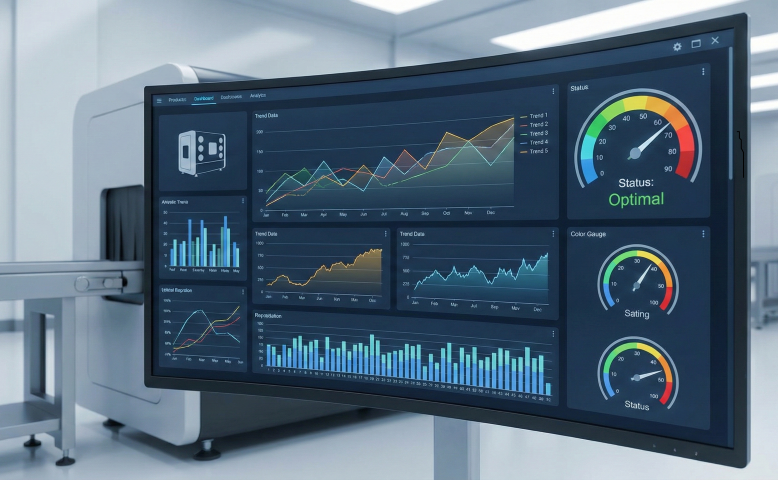
According to the U.S. Department of Energy (2022), a functional predictive maintenance program can yield a tenfold return on investment. The math is straightforward. If a production line generates $10,000 of product per hour, a four-hour emergency shutdown costs $40,000 plus parts and overtime labor. If a sensor warns you three days in advance, you fix it during a scheduled lunch break. Cost: negligible.Spare Parts Inventory Optimization
In a reactive world, you keep a warehouse full of spare motors because you never know which one will die. With predictive maintenance in industries, you order parts just in time.You don't need five spare motors collecting dust; you need one, ordered two weeks before the current one fails. This releases capital tied up in inventory.
Energy Efficiency
Equipment efficiency monitoring isn't only about failure; it is about performance. A degrading machine works harder. A pump with a clogged filter draws more power. Identifying and fixing these minor inefficiencies can lower factory energy bills significantly.
Implementation: How to Get Started
Jumping into smart maintenance systems without a plan is a recipe for expensive confusion. You cannot simply slap sensors on everything and hope for the best.
The Pilot Program
Start small. Pick your "bad actors," the five or ten machines that cause the most headaches or are most critical to production. Equip them with real-time equipment monitoring tools. Prove the concept there. Once you save the plant from one major catastrophe, getting budget approval for the rest of the facility becomes much easier.
Data Hygiene and Context
An algorithm is only as good as the data it is fed. If your historical maintenance logs are empty or inaccurate, the machine learning for equipment monitoring models will struggle. Clean up your data processes. Ensure technicians are logging what they fixed and why it broke.
The Cultural Shift
This is often the hardest part. You are asking seasoned mechanics who have relied on their intuition for 30 years to trust an iPad.
· Involve them early. Let them see how the tool makes their job easier/safer.· Training. Show them that industrial automation maintenance tools are extensions of their expertise, not replacements for it.
Challenges and Pitfalls to Avoid
While the technology is powerful, the road to implementation has potholes.
Integration Headaches
Factories are rarely uniform. You likely have a mix of brand-new CNC machines and a stamping press from 1985. Getting these disparate systems to talk to a unified industrial predictive maintenance platform can be tricky. Look for "protocol-agnostic" solutions that can pull data from legacy PLCs as well as modern IoT devices.
Alert Fatigue
If you set your alarm thresholds too low, your phone will buzz every five minutes. Eventually, operators stop looking. This is called alert fatigue. The system must be tuned to filter out noise and only escalate genuine anomalies.
The Future of Industrial Maintenance
We are approaching a time when machines will essentially become self-healing. Well, perhaps not physically healing, but autonomously managed.Conclusion
The transition to industrial predictive maintenance is not merely a technological upgrade; it is a strategic necessity. By integrating predictive maintenance solutions, manufacturers gain control over their assets rather than being controlled by them. From reducing downtime to optimizing energy use, the benefits ripple through the entire organization.
The factories of the future will be quiet, efficient, and boring in the best possible way. No explosions, no frantic midnight repairs, just smooth, optimized production.